Steady Decisions.
Accountable Leadership.
Performance That Holds Under Pressure.
Psychological safety doesn't fail at the policy level.
It fails at the leadership level.
You can feel it before
you can name it.
The same miscommunication, on repeat, in the same meetings.
Silence in the rooms where someone needed to say the hard thing.
Reactivity the moment stakes rise.
The person who used to challenge well has gone quiet.
A leader carrying more than the role was ever built to hold.
Teams playing it safe instead of thinking sharply and challenging well.
If you can feel that shift in your organization, you're not imagining it.
Organizations stall for the same reason individuals do. Under sustained pressure, behaviour changes before anything on paper does. Decision-making narrows. Accountability softens. Performance becomes effortful instead of precise. The issue isn't motivation, and it isn't the policy. It's how pressure is moving through the people leading under it.


The part most
programs miss.
Most organizations already have the policies, the values, the leadership expectations. On a calm day, they hold.
Under sustained demand, they don't because psychological safety is downstream of the internal state of the people leading it. A leader under pressure doesn't reach for the framework. They reach for the pattern that's been running underneath it for years.
The team feels that shift long before anyone can name it.
This is why culture work built on documentation keeps failing at the same point. You can install a policy. You can't install steadiness. The steadiness has to be built at the leadership level, or the pressure just gets redistributed across the team and called something else.
That's the level this work operates at.
The Standard behind sustainable culture.
This work is anchored to the National Standard of Canada for Psychological Health and Safety in the Workplace (CSA Z1003) and aligned with ISO 45003, the international standard for managing psychosocial risk.
This isn’t box-checking. It’s behavioural and operational change that directly influences how people lead, work, and perform.
Identify psychosocial risks and the cultural pressure points feeding them
Reduce the stressors that quietly erode performance
Strengthen leadership consistency and communication under pressure
Improve team trust, participation, and accountability

Why this matters.
The cost of this doesn't announce itself. It shows up as turnover, as the deal that didn't close, as the leader who left, as a team quietly working at half its capacity.
In plain numbers: mental-health-related claims account for roughly 30 to 40% of short-term disability claims in Canada. They last longer than physical claims, and they cost more.
There's a compliance driver too. Under the National Standard of Canada for Psychological Health and Safety and evolving regulation aligned with ISO 45003, organizations are increasingly expected to assess and manage psychosocial risk the way they manage physical safety.
The business case and the compliance case point the same direction. Most organizations feel the pressure long before they act on it.
The ones that move early spend far less fixing it.







How I can help
There are a few ways in, depending on where your organization is.
An assessment gives you a bounded, clear read of where pressure is building in your leadership team and where psychosocial risk is actually accumulating, delivered as a debrief you can act on.
Workshops help leaders and teams understand how pressure shapes behaviour at work, and how to respond instead of react when the stakes are high.
And for organizations ready to go further, tailored leadership programs build psychological safety into how a team operates day to day, as behaviour that holds under pressure rather than documentation that doesn't.
Where you start depends on where the pressure is showing up first, which is exactly what a conversation is for.
Featured In She & Success Business Magazine


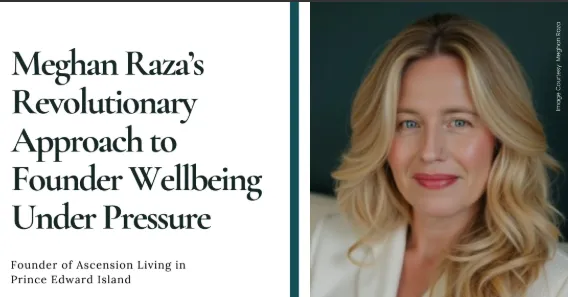


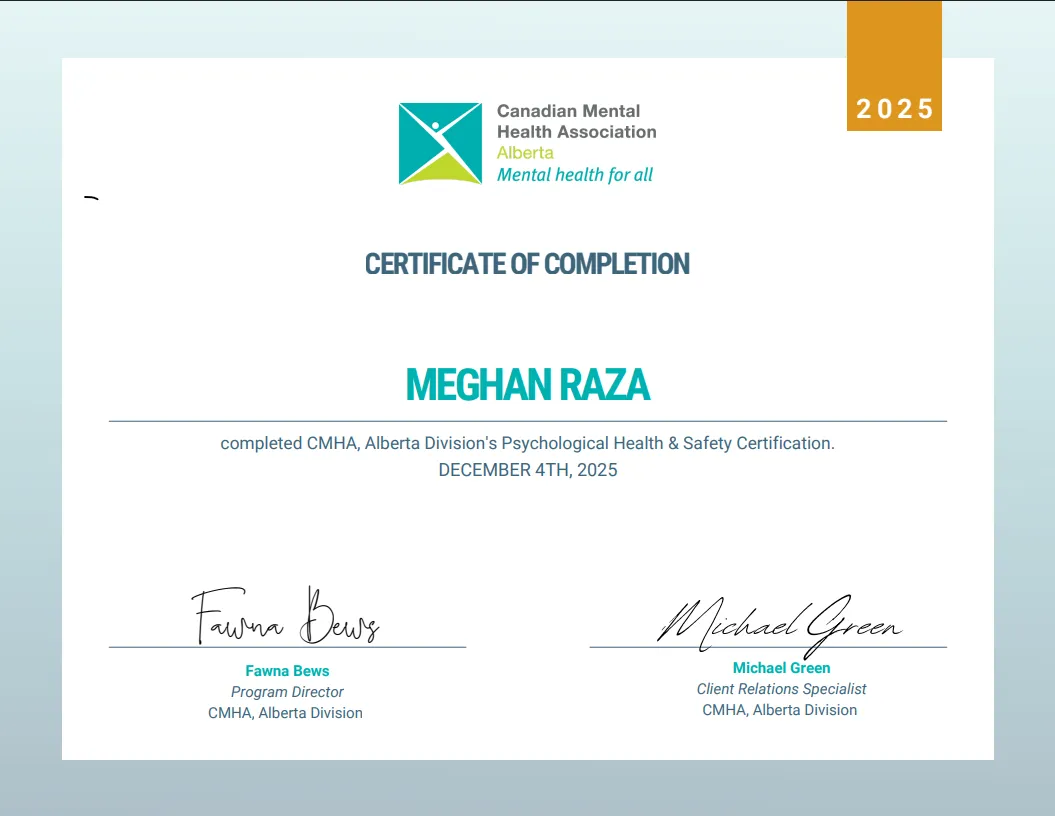
certified hypnotherapist and neuro-performance coach working with clients across Canada online and in person. My work uses clinical hypnotherapy, NLP and neuropsychology-informed coaching to help women business owners and leaders work on pressure, performance and the patterns running underneath both. Clients also find this work under mindset coaching, subconscious work and stress and burnout support.
I am a member of the International Hypnosis Association and work to their Code of Ethics, which covers client confidentiality, practising within scope, and referral to licensed healthcare professionals where that is the right call.
I am not a medical doctor, psychologist, or regulated mental health professional. I do not diagnose, treat, or prescribe for medical or mental health conditions. If you have a medical or psychological concern, please consult a licensed healthcare provider.
© Copyright 2026. Ascension Living. All rights reserved. Ascension Living provides neuro-performance coaching and Psychological Health and Safety advisory services based in Prince Edward Island, Canada. 32 Captain James Crescent, Stratford, PEI C1B 4L6. For privacy inquiries, contact [email protected].